Extension planning guide
Hidden Extension Renovation Costs UK
The costs most homeowners forget when budgeting for a house extension. From architect fees to party wall agreements, here is what catches people out.
Typical budget range
£30,000–£120,000+
Main cost drivers
Size, specification, glazing, foundations
Best use
Feasibility before design spend
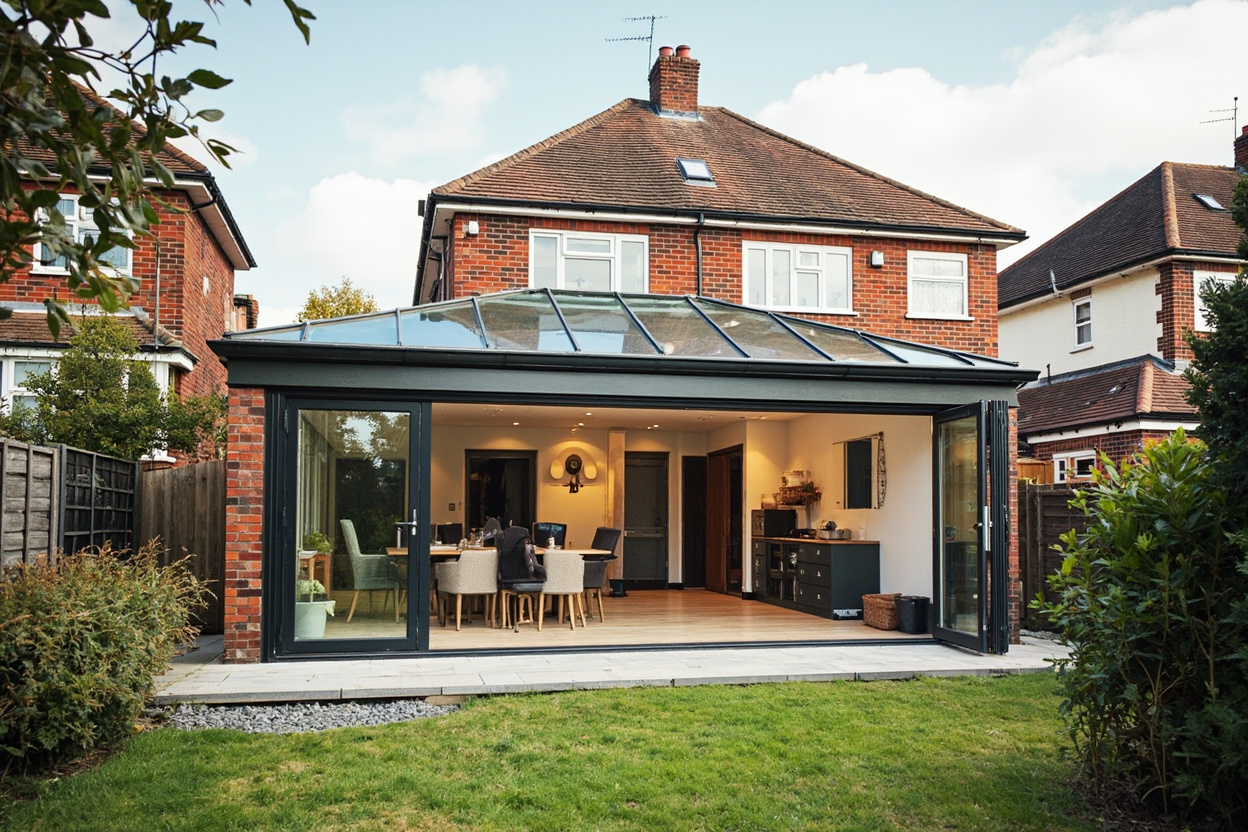
Extension example
The kind of rear extension result people picture — but the real budget is driven by structure, spec and ground conditions.
Extension guide snapshot
Per-m² figures help, but hidden build costs still matter
Foundations, steelwork, glazing packages and fit-out choices can swing the project far beyond the headline rate.
Remember
A crisp-looking extension budget can still be wrong if it ignores enabling works, drainage and finishing items.
Good next step
Use the extension calculator after reading to compare realistic size and spec combinations.
1. Architect and Design Fees
Plans drawn up by an architect typically cost 5–10% of the total build cost. This is a professional fee that many homeowners don't budget for:
- Feasibility and initial概念 design — £500–£1,500
- Full working drawings and planning submission — £2,000–£5,000
- Building Regulations drawings and liaison — £1,000–£2,500
- Site inspections during build — £500–£1,500
Some homeowners use pre-drawn standard plans to save on architect fees — this can work for simple single-storey extensions but limits design flexibility.
2. Planning and Regulation Fees
- Planning application fee — £206 for householder extensions, more for larger ones
- Pre-application advice (recommended) — £100–£300
- Building Regulations application — £500–£1,500
- Structural engineer drawings — £1,000–£3,000
- Party Wall Award (if semi or terraced) — £700–£2,000 per neighbouring property
3. Ground Works You Can't See
The foundations quote in a builder's estimate assumes reasonable ground conditions. What can push costs up:
- Rock or hard material requiring pneumatic breaking — £2,000–£10,000+
- Made ground (filled ground from previous structures) — may need deeper foundations
- High water table requiring pump or special drainage — £1,000–£5,000
- Tree roots (Tree Preservation Orders nearby) — £2,000–£8,000 for root barrier systems
- Clay heave risk — requires deeper strip foundations
4. VAT on Building Work
Most building work carries 20% VAT. However, some elements qualify for reduced rates:
- Conversion of an existing residential building — 5% VAT (not 20%)
- Renovation and alteration of an existing dwelling — 5% on labour
- New build extensions — always 20% VAT on materials and labour
Registering for VAT as a domestic customer can be complex. Using a VAT-registered builder means you pay their quoted price inclusive of VAT.
5. Utilities and Service Connections
- Moving gas meter or supply — £300–£2,000
- Moving or extending electricity supply — £200–£3,000
- Water main connection or relocation — £500–£3,000
- BT/Openreach cable diversion — £100–£500
- New boiler or heating capacity upgrade — £2,000–£6,000
6. Interior Making-Good
When you open up a house to build an extension, the junction between old and new always needs attention:
- Re-plastering walls where the extension connects — £500–£2,000
- Re-decorating entire walls or rooms — £500–£3,000
- Floor level transitions and threshold finishes — £300–£800
- New skirting boards and architraves — £200–£600
7. Site Security and Protection
- Scaffolding for the full duration of the build — £1,500–£4,000
- Site fencing and security — £300–£800
- Protection of existing surfaces — £200–£500
The 15% Rule
Professionals consistently recommend adding 15% contingency to any extension budget, rising to 20% for complex projects or properties with restricted access. For a £100,000 extension, that's £15,000–£20,000 of buffer. In practice, most extensions finish 10–20% over their initial budget once all the hidden costs are accounted for.
Estimate your extension cost with buffer
Use our calculator with a built-in contingency to avoid budget shock.
Open Extension Cost Calculator →Location-specific planning
Choose a country and location above so calculators use one consistent currency, unit system and state or UK-region planning factor. Browse calculators or review location coverage.
Sources and editorial limits
Evidence checked for this guide
These public sources were checked for construction-cost direction and regulatory context. They do not publish the page's exact planning ranges and are not presented as contractor quotations.
- Office for National Statistics construction price indices. Used for UK construction cost direction, not contractor quote data.
- Planning Portal extensions guidance. Used for planning-permission context in England.
- GOV.UK Approved Documents. Used to check structure, fire, energy, ventilation and access topics.
Editorial Standards: HomeProjects.money develops independent renovation benchmarks using verified UK statistical datasets (ONS), statutory building regulations, and trade labour standards. Every guide undergoes editorial verification for currency accuracy, regional trade compliance, and consumer budgeting reliability.
Editorial review
HomeProjects.money editorial team substantively reviewed this page on 18 August 2026. Location-sensitive figures should be checked using the country and area controls above. Estimates are planning ranges and must be checked against a written local scope and quotations. Read the methodology.