Loft planning guide
Types of Loft Conversions and What They Cost UK
The main types of loft conversions in the UK: Velux, dormer, mansard and hip-to-gable. See which is right for your property and what each costs.
Typical budget range
£20,000–£90,000+
Main cost drivers
Conversion type, stairs, en-suite, planning
Best use
Comparing loft routes before drawings
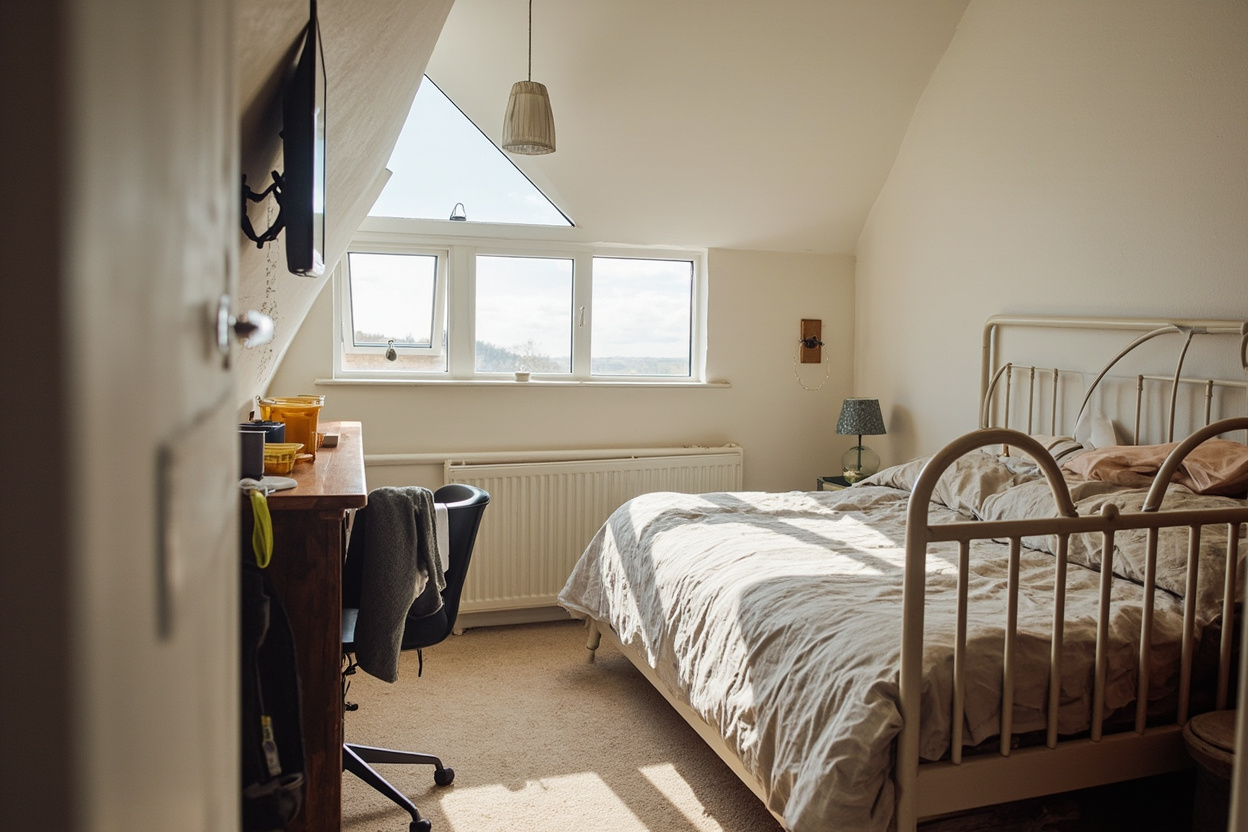
Loft example
A believable finished loft space — helpful for visualising the end result while you compare different structural options.
Loft guide snapshot
Loft costs depend more on conversion route than décor
Roof form, head height, staircase design and whether you add an en-suite often matter far more than furniture or finishes.
Remember
A cheap-looking loft quote can unravel quickly if it glosses over structural steel, access design or planning route.
Good next step
Use the loft calculator after reading to compare dormer, mansard and other conversion paths.
Loft Conversion Types at a Glance
| Type | Best For | Cost Range | Planning Usually Needed |
|---|---|---|---|
| Velux / Rooflight | Lofts with good head height, tight budgets | £15,000–£30,000 | No (Permitted Development) |
| Rear Dormer | Most common, terraced and semi-detached | £30,000–£55,000 | Usually no |
| Double / Corner Dormer | Maximum head height and floor area | £45,000–£75,000 | Possibly |
| Mansard | Detached properties, maximum space, flat roof | £60,000–£100,000 | Yes — full planning |
| Hip-to-Gable + Dormer | Detached homes, large loft conversion | £70,000–£120,000 | Yes — full planning |
Velux / Rooflight Conversion
The simplest and cheapest option. Velux windows are installed into the existing roof slope. No structural changes to the roof — just new windows and a staircase, plus insulation and lighting.
Key requirements:
- Minimum 2.3m of head height at the tallest point (or achievable with floor lowering)
- Sufficient landing space at the bottom for a staircase
- Roof slope must be at least 30° for Velux windows to work well
Planning: Velux installations usually fall under Permitted Development — no full planning application needed. Building Regulations approval is still required.
Rear Dormer
A dormer extends vertically from the roof, creating a box-shaped addition with a flat or pitched roof. The most common type in the UK because it adds the most usable floor space without changing the main roof profile.
Why it's popular: Rear dormers are invisible from the road, so they typically don't require full planning permission even in conservation areas. They create excellent full head height and allow standard windows.
Mansard Conversion
A mansard alters the roof slope to create a near-vertical wall with a shallow-pitched roof. It adds the most floor area of any conversion type but requires a flat or mansard roof to already exist — or significant structural work.
Planning: Almost always requires full planning permission as it changes the roof profile. Common in London where space is at a premium.
What Else Affects Cost
- Access staircase — if you're converting a 3-bedroom to a 4-bedroom, a proper staircase is required. Adds £3,500–£7,500.
- En-suite bathroom — adds £3,000–£8,000 if plumbing is extended to the loft.
- Fire safety upgrades — compartmentalisation and escape windows are required by Building Regulations.
- Property type — detached homes have easier access for steel beams. End-terrace and mid-terrace are more constrained.
- Existing condition — if the structure needs repairs or asbestos removal, costs rise quickly.
Estimate your loft conversion cost
Get an indicative budget range for your specific conversion type and location.
Open Loft Conversion Calculator →Country context for this guide
This page remains a UK-specific editorial guide so its existing search relevance is preserved. For US pricing, use the global project calculators and select a state and city. Browse calculators or review location coverage.
Sources and editorial limits
Evidence checked for this guide
These public sources were checked for construction-cost direction and regulatory context. They do not publish the page's exact planning ranges and are not presented as contractor quotations.
- Office for National Statistics construction price indices. Used for UK construction cost direction, not retail conversion prices.
- Planning Portal loft conversion guidance. Used for planning-permission context in England.
- GOV.UK Approved Documents. Used to check structure, fire safety, stairs, insulation and ventilation topics.
Editorial Standards: HomeProjects.money develops independent renovation benchmarks using verified UK statistical datasets (ONS), statutory building regulations, and trade labour standards. Every guide undergoes editorial verification for currency accuracy, regional trade compliance, and consumer budgeting reliability.
Editorial review
HomeProjects.money editorial team substantively reviewed this page on 18 August 2026. This is a UK-focused page; US visitors should use a project calculator with a US location selected. Estimates are planning ranges and must be checked against a written local scope and quotations. Read the methodology.