Project comparison
Kitchen Replace vs Refurbish Cost
Compare the cost of replacing a kitchen versus refurbishing it in the UK, including doors-only upgrades, worktops, labour and disruption.
Main trade-off
Lower spend vs deeper transformation
Budget lens
Condition, layout and service changes
Best use
Deciding whether to rip out or refresh
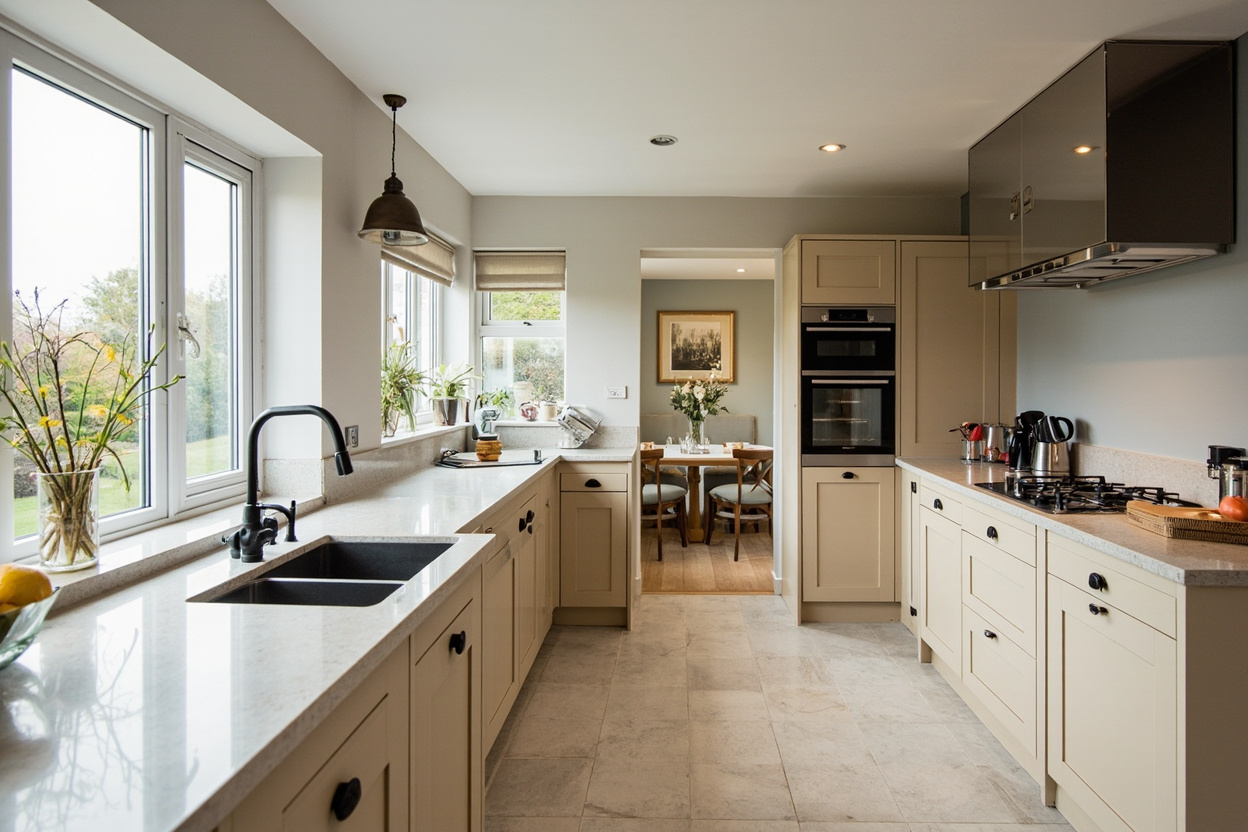
Refresh or replace
Many kitchens can be improved dramatically without a full replacement — if the structure and layout still work.
Comparison snapshot
The break-even point is usually hidden in the scope
Once you start moving services, changing layout or replacing multiple major elements, refurbishment savings shrink fast.
Remember
If the carcasses are sound and the layout works, a refresh often beats a rip-out on value.
Good next step
Check the kitchen calculator after reading to see whether your project is still in refurbish territory.
The decision between a full kitchen replacement and a refurbishment is one of the most common cost dilemmas for UK homeowners. Both paths can produce excellent results, but the right choice depends on the condition of your existing kitchen, what you want to achieve, and how much disruption you can handle while work is underway.
The core difference
A kitchen refurbishment works with what you already have — replacing doors and drawer fronts, re-laminating surfaces, updating handles and potentially replacing worktops. A full replacement strips out everything, including the cabinets, and installs new units from scratch alongside new flooring, new appliances and often a repositioned layout.
| Factor | Refresh / refurbish | Full replacement |
|---|---|---|
| Typical total cost | £2,000–£9,000 | £8,000–£30,000+ |
| Disruption duration | 3–7 days | 2–6 weeks |
| Structural changes | None | Possible — plumbing, electrics, walls |
| Appliances | Reused or partially upgraded | Usually all new |
| Best when | Cabinets sound, layout works, budget tight | Layout awkward, all equipment end-of-life |
Choose refurbishment if…
- The cabinet carcasses are structurally sound — particle board cores that are swollen or water-damaged won't hold up.
- The existing layout already works for how you use the kitchen and moving plumbing or electrics would add significant cost.
- You are on a tighter budget and want the biggest visual impact per pound — replacing doors and handles alone can transform a kitchen at a fraction of the cost.
- You need the kitchen to be usable again within a week and can't afford weeks of disruption.
Choose full replacement if…
- The existing layout is genuinely awkward — doors that hit worktops, a corner unit that wastes storage, or a hob-too-close-to-sink situation that you live with daily.
- Worktops, cabinets, flooring and appliances are all at or past the end of their serviceable life.
- You are already undertaking other work — rewiring, extending, fitting a new boiler — where the kitchen is being opened up anyway.
- You are planning to sell the property in the near future and want the kitchen to meet modern buyer expectations.
What determines the right choice
The condition of your existing cabinets is the single most important factor. Open a few doors and check the cabinet interiors. If the carcasses are solid, dry and free from swelling, a door-and-handle refresh is usually worthwhile. If the carcasses are degrading, replacement is the more honest choice — refurbishing a failing base will cost more in the long run. Use our Kitchen Cost Calculator to compare estimates for both approaches with your specific room size and location.
Location-specific planning
Choose a country and location above so calculators use one consistent currency, unit system and state or UK-region planning factor. Browse calculators or review location coverage.
Editorial review
HomeProjects.money editorial team reviewed this page on 6 August 2026. Location-sensitive figures should be checked using the country and area controls above. Estimates are planning ranges and must be checked against a written local scope and quotations. Read the methodology.