Bathroom planning guide
Hidden Bathroom Renovation Costs
The costs most homeowners forget when budgeting for a bathroom renovation. From waste disposal toplaster repairs and sealant, here is what catches people out.
Typical budget range
£4,000–£18,000+
Main cost drivers
Tiling, plumbing changes, suite quality
Best use
Planning before bathroom quotes
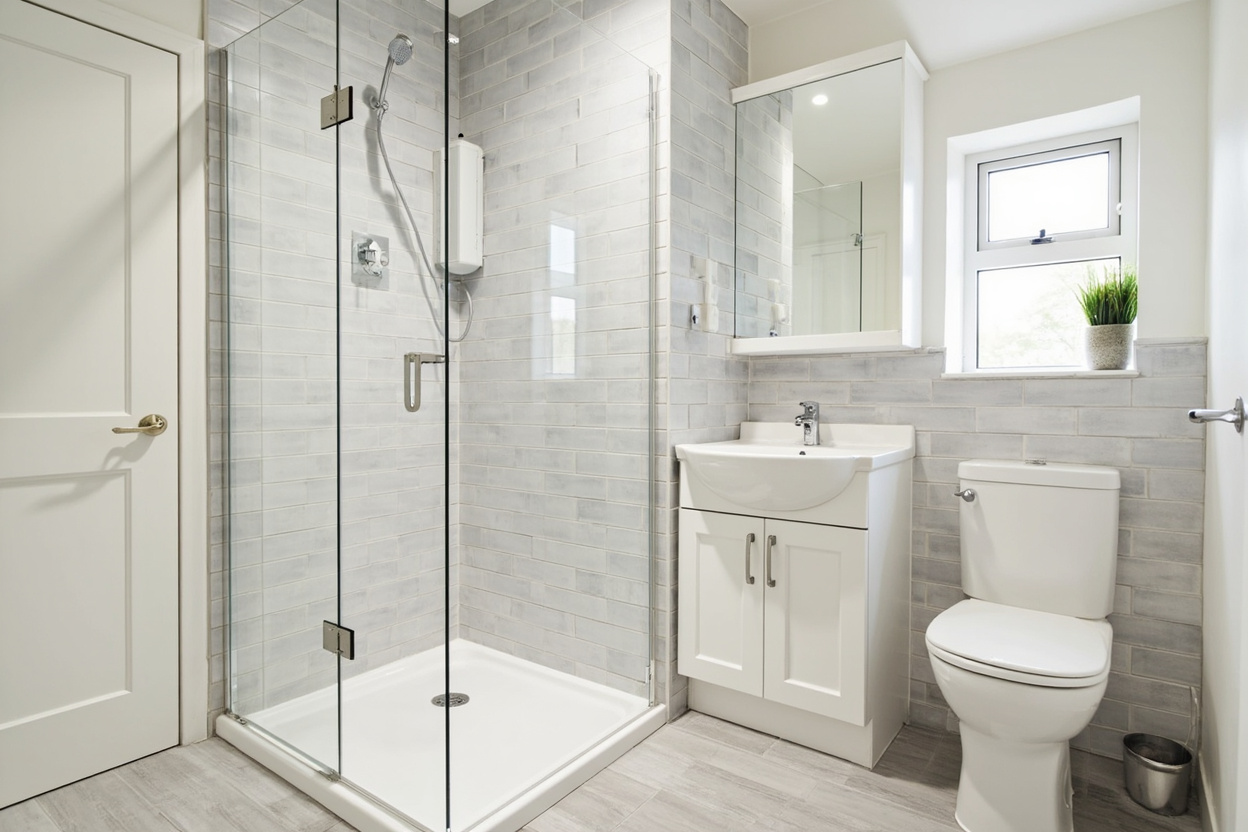
Bathroom example
The kind of clean mid-range bathroom finish many homeowners aim for before checking the real install cost.
Bathroom guide snapshot
Wet-area work makes bathroom budgets move quickly
Tanking, plumbing moves, tiling area and shower or bath decisions all matter more than the room size alone suggests.
Remember
Once wastes, waterproofing or full-height tiling are involved, the budget can climb much faster than a simple suite swap.
Good next step
Run the bathroom calculator once you know whether you are refreshing, refitting or converting to a wet room.
1. Removing and Disposing of the Old Suite
This is almost never included in fitting quotes. Removing an old bathroom suite requires specialist waste disposal — you can't put a ceramic toilet in a normal skip. Costs typically run:
- Man-and-van waste removal — £100–£300
- Specialist bathroom waste collection — £150–£400
- Skip permit if placing on road (required in many councils) — £25–£100
2. Plastering and Wall Repairs
Once tiles come off, walls are often damaged underneath. Even in a well-maintained bathroom, you'll typically need:
- Plaster patch repairs — £50–£200
- Full re-plastering of walls — £400–£1,200 for a small bathroom
- Moisture-resistant plaster or tile backer board — £50–£200 additional
If you're tiling directly onto plaster, a moisture-resistant board is essential — this adds cost but prevents mould and delamination.
3. Waterproofing and Tanking
Building regulations require adequate waterproofing in wet areas. This is frequently forgotten in budgets:
- Tanking membrane (liquid or sheet) — £80–£300 for a standard bathroom
- Sealant around shower tray and bath edges — £30–£80
- Shower trayInstallation and sealing — £50–£150 on top of the tray cost
4. Ventilation Requirements
Extractor fans are required by Building Regulations to prevent condensation and mould. Budget for:
- Basic extractor fan — £30–£80
- Humidity-sensor (automatic) fan — £80–£200
- Additional electrical works (new circuit if needed) — £100–£300
- External vent kit and ducting — £30–£80
5. Pipework and Plumbing Modifications
Moving a toilet, bath or shower by even a small amount can require significant plumbing work:
- Soil pipe extension or relocation — £150–£500
- New isolation valves — £15–£40 each
- Stop cock installation or replacement — £100–£300
- Water pressure test — often included but worth confirming
6. Flooring Preparation
The existing floor may need work before new flooring can be laid:
- Floor levelling compound — £20–£60 per m²
- Plywood overlay if floor is weak — £25–£50 per m²
- Removal and disposal of old flooring — £50–£150
7. Accessories and Trims
These small items add up quickly and are frequently underestimated:
- Towel radiator and valves — £80–£400
- Mirror cabinet — £50–£300
- Shower screen or bath panel — £80–£400
- Silicone sealant (all joints) — £10–£30
- Grout and tile adhesive — £30–£100
- Tile trim and edgings — £20–£80
8. Alternative Facilities During Renovation
A bathroom renovation typically takes 1–3 weeks. If you only have one bathroom, factor in:
- Temporary shower facilities — £100–£300 per week rental
- Alternative accommodation if working from home — variable
The 10% Rule
Professionals consistently recommend adding a 10% contingency to any bathroom renovation budget to cover these hidden costs. For a £10,000 bathroom, that's £1,000 of buffer. For a £5,000 bathroom, it's £500. In practice, most homeowners spend closer to 15–20% over their initial budget when all the hidden costs are accounted for.
Get a more accurate bathroom cost estimate
Use our calculator for a full indicative budget including a contingency buffer.
Open Bathroom Cost Calculator →Location-specific planning
Choose a country and location above so calculators use one consistent currency, unit system and state or UK-region planning factor. Browse calculators or review location coverage.
Sources and editorial limits
Evidence checked for this guide
These public sources were checked for construction-cost direction and regulatory context. They do not publish the page's exact planning ranges and are not presented as contractor quotations.
- Office for National Statistics construction price indices. Used for UK construction cost direction, not contractor quote data.
- GOV.UK Approved Documents. Used to check drainage, ventilation, electrical and accessibility context.
- Planning Portal kitchens and bathrooms. Used for common permission and building-regulation considerations.
Editorial Standards: HomeProjects.money develops independent renovation benchmarks using verified UK statistical datasets (ONS), statutory building regulations, and trade labour standards. Every guide undergoes editorial verification for currency accuracy, regional trade compliance, and consumer budgeting reliability.
Editorial review
HomeProjects.money editorial team substantively reviewed this page on 18 August 2026. Location-sensitive figures should be checked using the country and area controls above. Estimates are planning ranges and must be checked against a written local scope and quotations. Read the methodology.